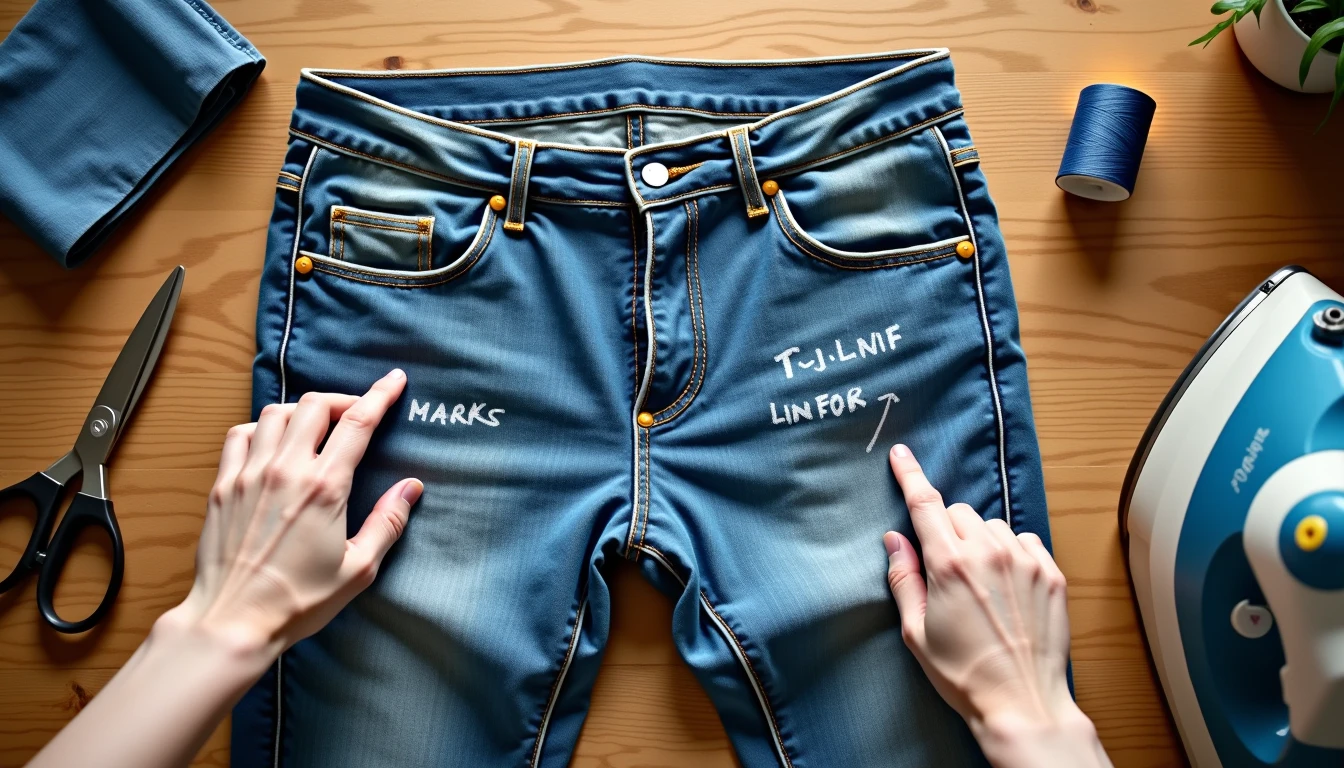
Hemming jeans while keeping the original factory hem preserves the exact fade and weight you actually want
Hemming jeans while keeping the original factory hem preserves the exact fade and weight you actually want. Instead of cutting off the bottom and sewing a fresh edge that looks stiff and new, this method folds the excess fabric inward so the original stitching and worn texture stay perfectly visible. It is the go-to alteration for anyone who has invested in quality denim and refuses to lose its character. After moderating thrift-haul communities and running Stitch & Swap Talk, I have helped dozens of beginners navigate this exact project, and I promise you: the process is straightforward once you respect the fabric. You do not need a professional studio to get clean results.
What You Need
- A reliable sewing machine capable of handling multiple denim layers
- Heavy-duty thread that matches your original hem color
- Straight pins or clips, fabric scissors, and a steam iron
- The shoes you wear most often for accurate length marking
- Time: A focused afternoon for the DIY version, or 3–5 business days if you hand it off to a tailor. Rush processing within 48 hours is available when you drop off before 4pm.
- Skill level: Intermediate beginner. You just need to be comfortable guiding thick fabric through a machine and pressing seams flat.
How To Do It
1. Mark your target length. Put on the jeans with your usual shoes and decide on your preferred break, which is how the fabric rests against your shoe. No break means the hem sits just above the shoe for a modern look. Slight break gives a classic fold at the ankle. Full break creates a relaxed drape with extra fabric pooling slightly.
2. Calculate the fold. Measure exactly how much length you need to remove. The key is to leave enough room above the original hem edge to create a clean inward fold without distorting the factory stitching. Mark your line with chalk or a fabric pen.
3. Fold and pin. Turn the jeans inside out. Fold the excess fabric upward just above the original hem line. Pin or clip the fold securely so it lies flat against the inside leg. This keeps the factory edge visible on the outside while hiding the raw edge inside. Double-check your side seams so the legs stay symmetrical.
4. Stitch the fold. Sew a straight line along the inner fold, following the existing seam path as closely as possible. Keep your hands steady and guide the denim without pulling. Pulling stretches the weave and creates wavy seams that refuse to lie flat. Let the feed dogs do the work. This secures the fabric from the inside and locks the original hem in place.
5. Press and finish. Use a hot iron to press the new seam flat. Steam works best for denim. Hold the iron down for a few seconds on each section rather than sliding it back and forth. This prevents the fold from shifting while the fibers cool. Turn the jeans right side out and inspect the drape.
Where It Goes Wrong
- The fold twists or bunches. This happens when the fabric isn't pinned evenly around the entire circumference. Take your time aligning the side seams before you start stitching. If it bunches, rip the seam, re-pin from the center outwards, and try again.
- The machine struggles with thickness. Denim stacks up quickly at the hem junction. If your machine skips stitches or stalls, slow down, hand-crank over the thickest part, and use a longer stitch length to reduce tension buildup.
- Thread tension drifts under heavy fabric. If your stitches look loose on the top and tight on the bottom, check your bobbin area for lint buildup. A quick clean and a test scrap usually solve it.
- My first attempt looked messy because I rushed the pinning stage and the fold shifted mid-stitch. I unpicked it, pressed the fold line first to create a crisp crease, and the second pass clicked perfectly.
- Raw denim shrinks after hemming. Unwashed denim will contract once it hits water. Wash your jeans once before you measure or fold. If you skip this step, your carefully calculated length will suddenly sit too high.
Pro Tips
- Bring the exact shoes you plan to wear with these jeans. Heel height and sole thickness change the ideal length more than you think.
- Tell yourself or your tailor if you plan to cuff the jeans. Cuffing requires extra fabric above the hem, so you will adjust the fold height accordingly.
- This technique works on skinny, straight, bootcut, wide-leg, boyfriend, and flared cuts. The fold method adapts to almost every leg shape.
- If your jeans are heavily distressed or the original hem is extremely thick, the fold may not lay flat. In those cases, a standard cut-and-sew hem is the safer route.
- If you are spending fifty dollars or more on a pair, preserving the original hem is worth the extra effort. The factory finish carries weight, fade, and stitching precision that you cannot replicate at home.
Bottom Line
Attempt this project when you own premium, selvedge, or raw denim where the factory edge defines the garment's value. Skip it for basic everyday pairs where a fresh hem will look perfectly fine. The DIY route costs only your time and a spool of thread, while professional tailoring runs the standard 3–5 business day turnaround. If your first attempt looks rough, that is completely normal. The second one is where the muscle memory clicks. Take your time, press your seams, and let the original fade do the talking.