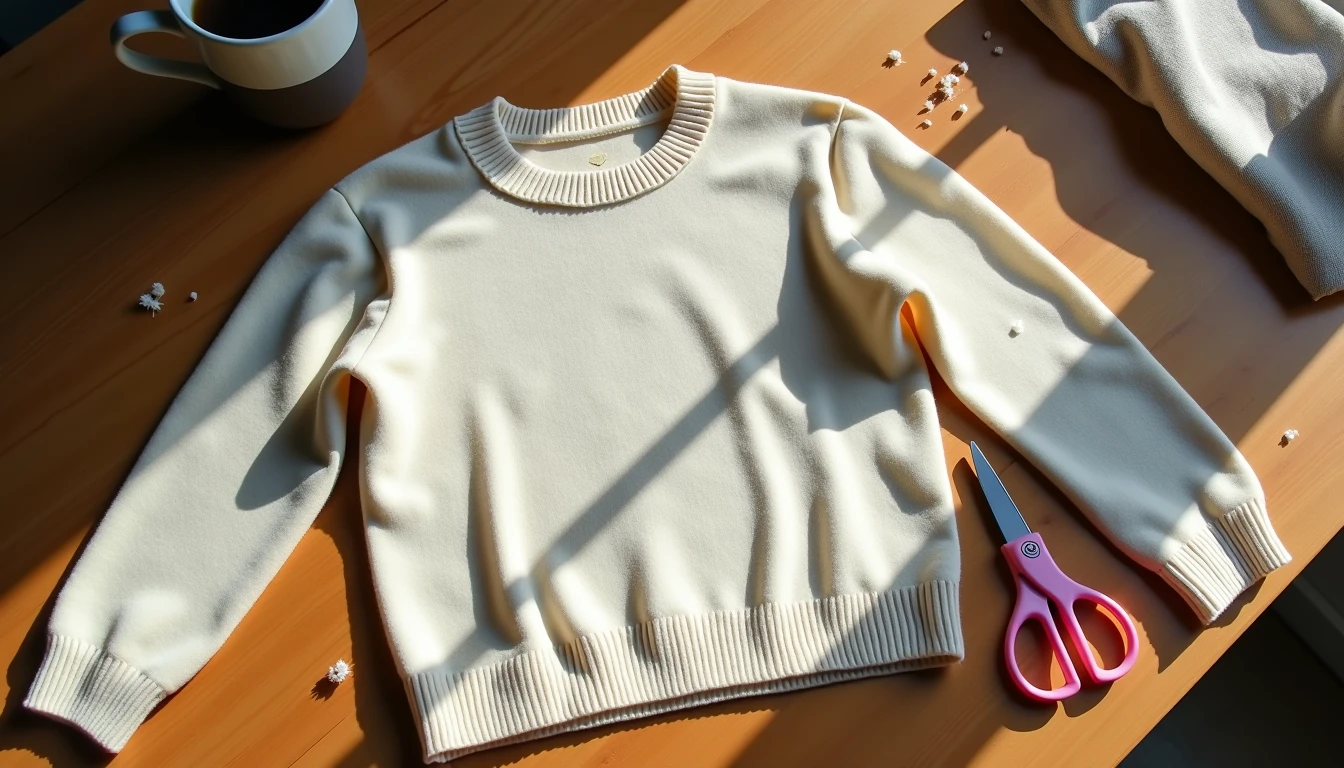
Turn a shrunken cashmere sweater into a wearable crop top in under an hour
What You Need
- One shrunken cashmere sweater
- One Japanese crop top or well-fitting base layer (used as a cutting template)
- Sharpie
- Tiny kid scissors
- Time: One afternoon. Skill level: Absolute beginner. Cost: $0 (upcycling a discarded piece)
I keep a dedicated pair of small scissors for this exact job because control beats power when you are working with dense knits. This method requires zero sewing experience, no machine, and no special fabric. You are simply reshaping what you already own. If you have never altered a garment before, this is the perfect starting point. Felted cashmere (wool fibers that have tightened and matted together from heat and agitation) holds its shape well, which is why it cuts cleanly without unraveling.
How To Do It
1. Lay your shrunken sweater completely flat on a hard surface. Smooth out any wrinkles so the fabric sits evenly. Felted knits are stable, but shifting fabric will throw off your symmetry.
2. Place your Japanese crop top directly on top of the sweater. Align the shoulders and center front so the template sits straight. This acts as your paper-weight guide.
3. Outline the new hemline and neckline with the sharpie. Follow the template edges closely. Mark both the front and back panels separately to keep your cuts balanced.
4. Cut along your marked lines using the tiny kid scissors. Take your time. Cashmere cuts like dense felt when fully shrunk, but small blades give you precise control around curves.
5. Try it on. Check the length, shoulder fit, and back drape. If the back hangs too loose, pin it temporarily to test a cleaner silhouette before deciding whether to leave it raw or adjust it later.
Where It Goes Wrong
- Cutting too aggressively on the first pass. If you slice exactly on the sharpie line, you might end up with a cropped length that feels too high or uneven. Recovery: Cut in small increments. You can always take more fabric away, but you cannot stitch it back on.
- Using large household scissors. Big blades drag the knit, warp your template, and make curved cuts jagged. Swap to small, sharp scissors or a rotary cutter with a cutting mat if you have one.
- Ignoring the ribbed waistband. The original hem will remain intact unless you cut past it. If the ribbing sits awkwardly on your hips, mark your new hemline above the ribbed section and cut through it. The raw edge will roll slightly, which gives that lived-in, vintage look.
- First attempts often look rough around the cut edges. That is completely normal. Felted cashmere does not fray, so unfinished edges are structurally sound. Wear it as-is for a few cycles; the fibers will soften and settle into a clean finish.
Pro Tips
- Lean into the raw edges intentionally. Leaving the cut edges raw mimics the relaxed, deconstructed aesthetic of vintage activewear and saves you from hemming. It also creates a soft, flexible neckline that layers easily over strappy tanks.
- Adjust the fit later if needed. Pin the back center together temporarily if you want a closer silhouette. You can add a few small buttons or a hidden safety pin later to cinch the excess fabric without altering the front panel.
- Keep a dedicated template garment. I reuse an old cotton crop top that I no longer wear. It acts as a consistent guide for future upcycles, so you stop guessing proportions and start cutting with confidence.
- If you ever want to finish the edges later, a simple hand whipstitch or a narrow zigzag works well. My grandmother’s old machine handles light knits beautifully, but for this specific method, you do not need a machine at all.
Bottom Line
This method works best for fully felted wool or cashmere sweaters that have already shrunk past their wearable size. If the knit is still loose or heavily textured, it may stretch out of shape once cut. For delicate, non-felted knits, a tailor can professionally shorten and re-hem the garment, but it will cost more than the sweater itself. This upcycle costs nothing beyond the time you invest, and it rescues a piece that would otherwise sit in storage. If your first cut looks uneven, that is expected. The second one is where the process clicks. You are trading perfection for wearability, and that is exactly how secondhand fashion stays in rotation.