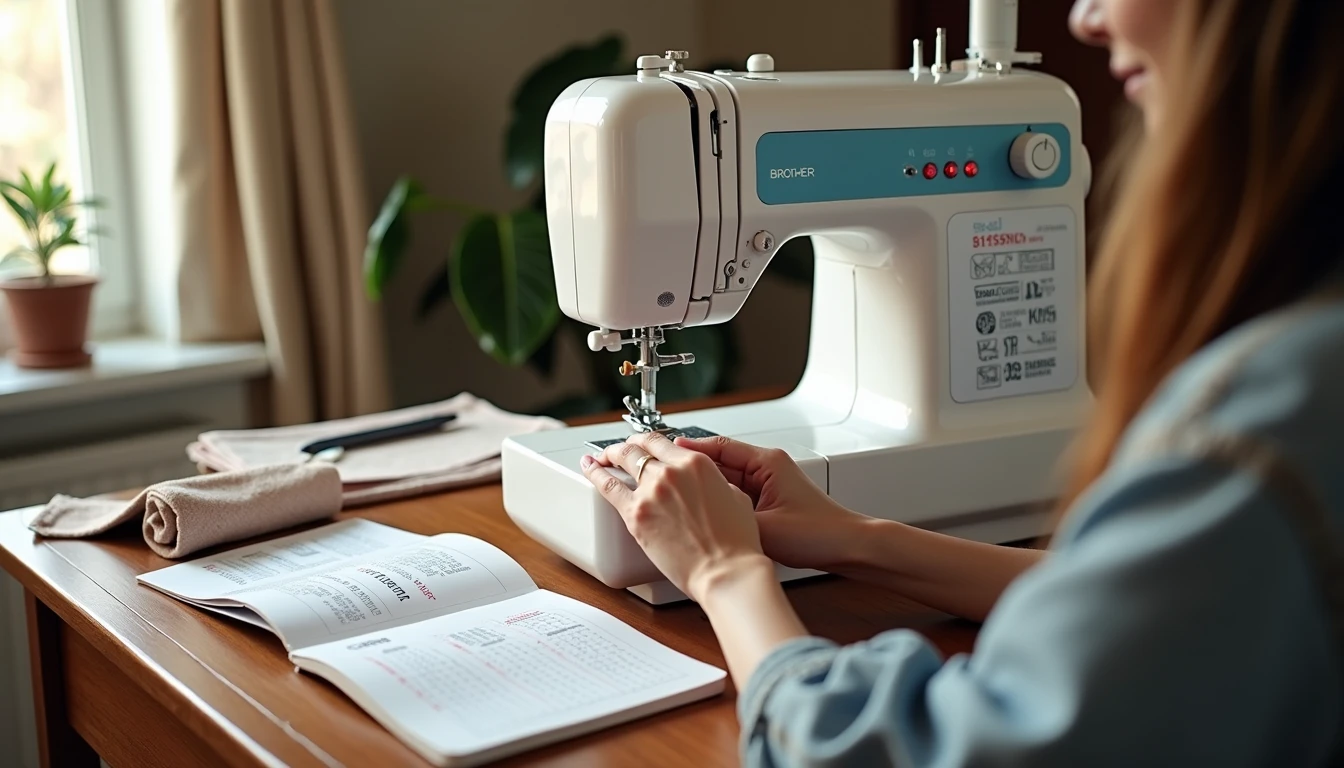
Choosing a beginner sewing machine in 2026: the 5 features that save you from thread nests and quit-frustration
What You Need (tools, materials, time, skill level)
Time: 30–60 minutes to compare models and features realistically (longer if you go down review rabbit holes).
Skill level: Total beginner friendly (this is about avoiding common first-machine traps).
Tools/materials:
- This guide is about *choosing* a machine, so you don’t need tools yet. What you *do* need is a short list of the kinds of projects you actually plan to sew (hemming, tote bags, repairs, denim, etc.).
Budget reality from the source:
- A beginner machine sweet spot is $150–$350.
- Going below $100 often means cut corners on build quality.
- You should not have to spend $800 to get something that lasts.
Beginner reassurance from me (Mei): Most people overthink this. Your first machine doesn’t need 200 fancy stitches. It needs to do the basics cleanly and not punish you while you learn.
How To Do It (pick a machine without getting overwhelmed)
Step 1) Start with the short list (the source’s 2026 picks)
These are the specific models the source calls out as “top picks” for beginners in 2026:
- Brother CS6000i — Best Overall
- Singer Heavy Duty 4423 — Best for Thick Fabrics
- Janome 2212 — Best Mechanical Pick
- Brother XM2701 — Best Budget Pick
- Bernette b05 Academy — Best for Precision
- Juki HZL-F300 — Best for Growing Skills
If you’re the kind of thrifter/upcycler who might hem denim, repair canvas, or sew through bulky seams, you’ll naturally look harder at the Singer Heavy Duty 4423 category. If you want simple dials and fewer screens, the Janome 2212 style “mechanical” control makes life calmer.
Step 2) Use the “5 beginner features” checklist (this prevents regret buys)
The source boils beginner-friendly down to five things. This is the part I wish someone had taped to my wall when I started.
1) Ease of threading
Threading is not a “small thing.” If you can’t thread it without a tutorial and perfect lighting, you’ll avoid sewing altogether. Beginner-friendly machines tend to have clear thread paths (often color-coded), and many include automatic needle threaders (a built-in feature that helps pull thread through the needle eye).
2) Consistent stitch quality
Uneven stitches are the fastest way to make a beginner think they “suck,” when really the machine is being fussy. The source emphasizes: beginners need clean, even stitches at various speeds, even when your foot pedal pressure isn’t perfectly consistent yet.
3) A manageable number of stitches
You do not need 200 stitches. The source points out most beginners use:
- Straight stitch (the basic seam stitch)
- Zigzag (a side-to-side stitch used to finish edges or sew stretchy areas depending on fabric)
- Buttonhole stitch (for, well, buttonholes)
That’s 90% of what most beginners actually use.
4) Durability at a fair price
This is the money trap. The source says you shouldn’t have to spend $800, but going under $100 usually means the build quality is compromised. Keep your expectations in the $150–$350 “sweet spot.”
5) Forgiving tension and feed systems
Tension is how tight the top and bottom threads pull against each other to form a balanced stitch. Feed is how the machine pulls fabric under the needle. Beginners make normal handling mistakes (pulling fabric, inconsistent guiding), so you want a machine that’s forgiving—one that doesn’t instantly reward you with jams and thread nests.
Step 3) Match the model to your real life (not fantasy projects)
Use the source’s “best for” labels honestly:
- If you plan to sew thicker fabrics like denim and canvas, prioritize the Singer Heavy Duty 4423 category.
- If you want simple dial controls over computerized screens, the Janome 2212 category is your friend.
- If you want a machine you won’t outgrow quickly, look at “growing skills” like the Juki HZL-F300.
Step 4) If you’re choosing the Brother CS6000i, know why it’s beginner-friendly
From the source: the Brother CS6000i stays a top beginner pick because:
- It’s computerized
- Has 60 built-in stitches
- Includes an automatic needle threader
- Has a wide table for larger projects
- Controls are intuitive: you select stitches on an LCD screen, and the machine sets “optimal width and length” by default (and you can adjust manually later)
That last part matters: reliable defaults reduce the number of “mystery problems” when you don’t yet know whether the issue is threading, tension, needle choice, fabric, or technique.
Where It Goes Wrong (beginner failure modes + how to recover)
1) Buying based on stitch count (instead of stitch quality)
Sign you’re off-track: You’re comparing “60 vs 200 stitches” like it’s a phone storage plan.
Fix: Re-center on the source’s reality: straight stitch, zigzag, and buttonhole handle most beginner projects.
2) Underestimating threading frustration
Sign you’re off-track: You accept “I’ll just learn eventually” about threading, then dread setting up.
Fix: Prioritize clear threading paths and beginner features like an automatic needle threader.
3) Going too cheap and paying later in jams and inconsistency
Sign you’re off-track: You’re tempted by under $100 machines and hoping skill will overcome hardware.
Fix: Use the source’s pricing guardrails: aim for the $150–$350 sweet spot when you can.
4) Choosing a machine that punishes normal beginner fabric handling
Sign you’re off-track: You end up with thread nests, uneven stitches, and constant re-threading even on basic seams.
Fix: Put “forgiving tension and feed” high on your checklist—this is what keeps sewing fun while your hands learn control.
Pro Tips (beginner shortcuts that keep you sewing)
- Pick your “best for” category first, then compare features. The source already organized the chaos: overall, thick fabrics, mechanical, budget, precision, growing skills.
- Trust default settings when you’re learning. The source highlights how the Brother CS6000i sets optimal stitch width/length automatically—this reduces variables while you build confidence.
- Aim for a machine that stays out of your way. That’s the source’s core truth: your first machine doesn’t need to do everything; it needs to do basics well.
Bottom Line (what to buy, what to avoid, and why it matters)
A good beginner sewing machine in 2026 is the one that helps you learn without constant friction: easy threading, consistent stitches, a manageable stitch set, durable pricing in the $150–$350 range, and forgiving tension/feed. If you want an all-around beginner-friendly setup with reliable defaults, the source points to the Brother CS6000i (computerized, 60 built-in stitches, LCD selection, automatic needle threader, wide table). If you expect to sew denim and canvas, the source’s “thick fabrics” pick is the Singer Heavy Duty 4423.
If your first projects are simple repairs and thrift flips, prioritize “easy and consistent” over “feature-packed.” If it looks rough at first, that’s normal—the second project is where it clicks.