Learning how to wash leather jacket pieces can feel intimidating, especially when the jacket came from a thrift store, resale app, or a relative's closet. The good news is that most leather jackets do not need a soaking wash. They need careful surface cleaning, controlled moisture, patience, and the right conditioner. No such thing as a stupid question here — let's walk through it.
Leather is animal hide, not ordinary fabric. A washing machine, hot water, strong detergent, or tumble dryer can strip natural oils, shrink panels, crack the finish, or distort the lining. Before you start, read the care label and identify the material. Smooth finished leather, suede, nubuck, faux leather, and bonded leather all react differently. If the label says dry clean only, or if the jacket is valuable vintage leather, a leather specialist is the safest choice.
Identify the jacket before cleaning
Start with a close inspection in bright light. Look for peeling, sticky patches, deep stains, mold, dye transfer, loose seams, and brittle areas. If the surface is already flaking, water will not repair it. In that situation, cleaning can make the damage more obvious, so photograph the condition first and consider a professional opinion.
A simple water-drop test can help with smooth finished leather. Put one tiny drop on an inside hem or another hidden area. If it beads up, the finish has some water resistance. If it darkens the leather immediately, the material is more absorbent and needs an especially light touch. Do not perform this test on suede or nubuck; those surfaces require a suede brush and cleaner made for nap leather.
For a thrifted jacket with a musty smell, air it outdoors in shade for several hours rather than spraying perfume over it. Sunlight can fade leather and make some finishes brittle. Remove the belt, detachable collar, and any decorative pieces before cleaning. Empty every pocket, then use a soft clothes brush or vacuum with a brush attachment to lift loose dust.

Gather gentle supplies and test first
To follow how to wash leather jacket instructions safely, gather two or three white microfiber cloths, a bowl of lukewarm water, mild unscented soap, cotton swabs, a soft sponge, and a leather conditioner. A product such as Lexol Leather Cleaner is commonly sold for finished leather, while Bickmore Bick 1 is another widely available cleaner. Always follow the product label rather than assuming every leather formula works on every finish.
Avoid household bleach, disinfecting wipes, alcohol, acetone, saddle soap used heavily, dishwashing liquid, and essential oils. These can leave residue or remove finish. A small amount of mild soap diluted in water is enough for light grime. You want a damp cloth, not a wet jacket.
Test any cleaner and conditioner on an inside seam, under the collar, or inside a pocket flap. Apply a small amount, wait until it dries, and check for darkening, tackiness, color transfer, or a change in shine. If the test area looks wrong, stop there. This five-minute test can save a jacket that cost $20 at a resale shop or $200 from a vintage seller.
How to wash leather jacket surfaces by hand
The safest answer to how to wash leather jacket exteriors is gentle hand cleaning, one panel at a time. First, dampen a microfiber cloth with lukewarm water and wring it until it feels almost dry. Wipe the collar, shoulders, sleeves, and body with light overlapping strokes. Rinse or replace the cloth as dirt lifts so you do not spread grime across the hide.
For visible marks, mix a few drops of mild soap into the bowl. Dip only the corner of a cloth, wring it thoroughly, and dab the stain. Do not scrub aggressively or keep rubbing one spot. Work from the outside of a mark toward its center to reduce a visible ring. Grease stains are difficult at home; repeated wet cleaning can enlarge them. Blot fresh grease with a clean cloth and let a leather professional handle a set-in stain.
Wipe away soap with a second cloth that is barely damp. Pay close attention to seams, zipper edges, cuffs, and pocket openings, where residue collects. Never pour cleaner directly onto the jacket, and never submerge the garment in a sink or bathtub. That is how water reaches the interior structure, adhesives, and lining.
Clean the lining without soaking the hide
The lining often holds body oil and odor, so it deserves separate attention. Turn the jacket inside out as far as the construction allows. Use a barely damp cloth with a drop of mild soap to wipe the collar and underarm lining. Keep the cloth away from the leather edge whenever possible. For a removable fabric liner, follow its care label; some can be hand washed separately, while others should only be spot cleaned.
If the lining is very damp, press it gently with a dry towel. Do not twist the jacket. For odor, hang it on a broad padded hanger in a ventilated room. A small bowl of baking soda placed nearby can absorb some smell, but do not sprinkle baking soda directly on leather or leave the jacket in a sealed plastic bag.
Dry, condition, and restore the shape
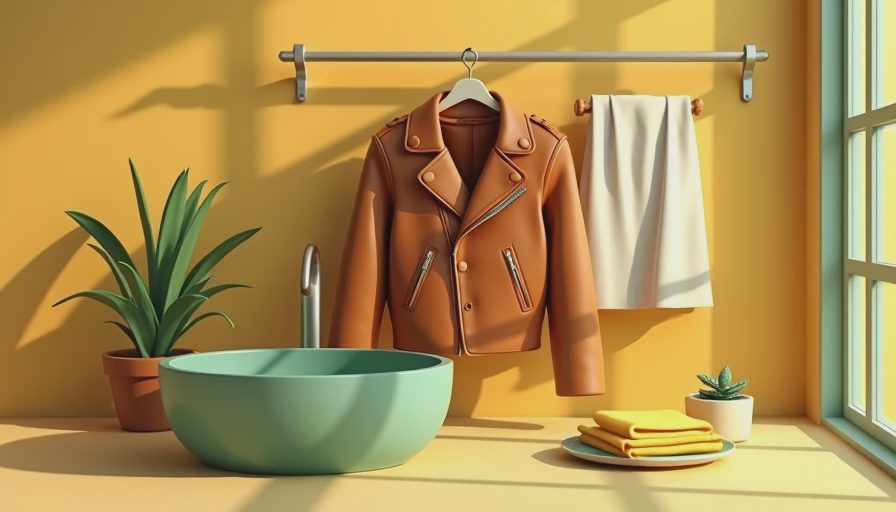
After cleaning, reshape the shoulders, smooth the sleeves, and leave the jacket open on a sturdy hanger. Let it dry at room temperature for at least overnight, away from radiators, hair dryers, fireplaces, and direct sun. Heat dries leather unevenly. It can create stiff panels, warped sleeves, or cracks that conditioning will not fully reverse.
Once the surface is completely dry, apply a small amount of leather conditioner to a cloth, not directly to the jacket. Spread a thin layer over a test area first, then continue in light passes if the finish responds well. Too much conditioner can make leather greasy, darken pale hide, or attract dust. Wait several hours, then buff lightly with a clean cloth. Suede and nubuck need their own protector, not smooth-leather conditioner.
Here's what went wrong + how I fixed it: I once used too much conditioner on a secondhand jacket because the leather looked thirsty. The sleeves became tacky and picked up lint. A patient wipe with a clean, dry cloth and two days of air circulation improved it, but the better lesson was simple: thin coats beat enthusiastic soaking.
When professional cleaning is the smarter fix
Home cleaning is reasonable for surface dust, light collar grime, and minor marks on finished leather. Choose a professional leather cleaner for mold, heavy smoke odor, ink, extensive grease, water stains, antique finishes, shearling, or a jacket with peeling and cracking. Ask what process they use and whether they have handled that type of leather before. Regular dry cleaning is not automatically appropriate because conventional solvent processes can be unsuitable for some leather garments.
If you accidentally soaked the jacket, do not panic and do not add heat. Blot excess water with towels, place it on a broad hanger, and let it dry slowly. Avoid bending it repeatedly while damp. Once dry, a professional can assess stiffness, dye changes, and structural damage.
A simple maintenance routine for thrifted jackets
You can avoid another deep clean by wiping the collar and cuffs after several wears, hanging the jacket with space around it, and storing it in a breathable fabric garment bag. Keep it away from damp basements and compressed plastic storage. Condition smooth leather sparingly, often once or twice a year depending on use and the manufacturer's guidance.
When someone asks how to wash leather jacket safely, the short version is this: inspect first, test every product, use minimal moisture, never machine wash, dry slowly, and condition lightly. These steps preserve the character that made the secondhand find special while preventing a small cleaning job from becoming an expensive repair. If you are still unsure how to wash leather jacket at home, start with a hidden test patch or take the jacket to a specialist. A careful beginner can absolutely handle routine care.





No notes yet — write the first one.