Let's be honest: the phrase "sew in vac" sounds a little made up. When a thrifting friend told me she bought one, I pictured a vacuum that lived inside a fabric bag. In reality, she meant a small handheld vacuum kept next to her sewing machine for quick cleanup. If you have ever turned old jeans into a tote bag and spent twenty minutes picking thread bits off your cutting mat, you already understand why a dedicated sewing vacuum matters.
Why Your Sewing Room Needs a Dedicated Vacuum
Sewing creates a specific mess: short thread clippings, fabric lint, frayed edges, and pin-sized scraps. A regular household vacuum is often too big to reach the small crevices of a sewing machine, and pulling out the hose every time you finish a seam is a hassle. A dedicated handheld vac, like the Black+Decker Dustbuster or the Shark Wandvac, sits on a shelf and is ready in seconds.
A sew in vac also protects your machine. Lint and dust buildup underneath the needle plate can cause skipped stitches and noisy operation. Vacuuming out the bobbin area after every project keeps the tension discs clean and prevents thread jams. For vintage machines from thrift stores, this is even more important, because decades-old felt and grease collect dust quickly.
What to Look for in a Sew In Vac
When you search for a sew in vac, you will see cordless sticks, canisters, and tiny pump vacuums. For sewing use, the best choice is almost always a cordless handheld vacuum with a brush attachment. Here is what to check:
Suction power matters, but not in the way you might think. You do not need a heavyweight model like the Dyson V15 for fabric lint. A lighter unit with 5 to 10 air watts is plenty. Many budget models, such as the Bissell Featherweight Stick Vac, cost around $40 and handle thread scraps easily.

Attachments make the difference. Look for a crevice tool and a soft brush. The brush prevents you from scratching the plastic casing of your sewing machine. A crevice tool lets you reach the feed dogs and the slot where the needle goes down.
Emptying the dust cup should be simple. Sewing lint is fluffy and clings to plastic, so a vacuum that opens from the top for quick dumping beats one where you have to twist off a canister. Battery life is also worth checking. A cordless model that runs for 15 minutes will get you through several sewing sessions if you charge it regularly.
The Best Types of Sew In Vac Options
There is no single right answer, but here is what tends to work for different setups.
If you work at a small desk and only hand-sew, a tiny USB-powered vacuum with a brush nozzle may be enough. It fits in a pencil cup and easily picks up thread scraps. For a standard sewing machine, a mid-size cordless handheld like the Black+Decker CHV1410 (around $30 to $50) offers more suction and a washable bowl.
For people with a full sewing room, a cordless stick vacuum that doubles as a handheld, like the Shark Wandvac, costs more but lets you vacuum the floor and the corners of your cutting table. Some upcyclers even keep a separate container for lint and use it as stuffing for small projects.
How to Vacuum Your Sewing Machine Safely
No such thing as a stupid question here, but there is a right way to vacuum a sewing machine. First, unplug the machine and remove the needle plate and bobbin case if you know how. Use the brush attachment on low suction to sweep away lint from the feed dogs and the race. Do not press the brush into delicate parts; let the suction do the work.
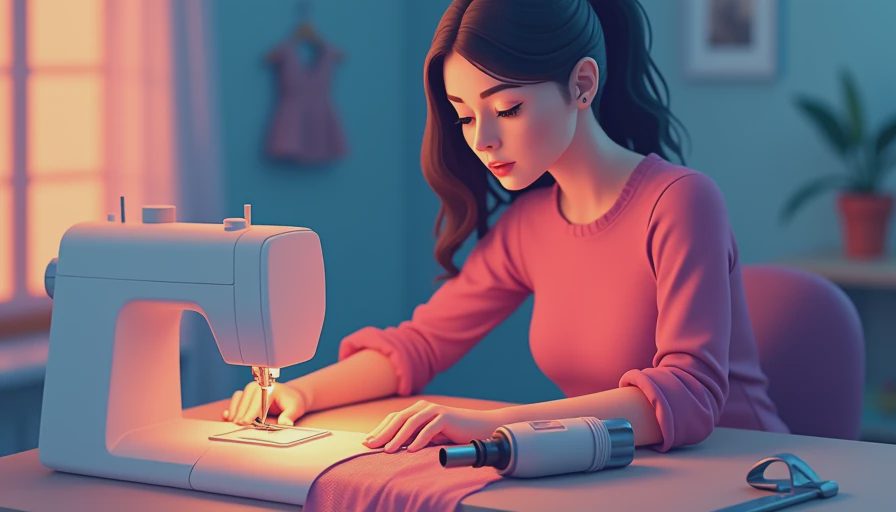
Hold the nozzle slightly away from the bobbin area so you do not snag the hook mechanism. For the upper section, use the crevice tool around the tension discs and take-up lever. If your machine has a built-in light, avoid pointing the vacuum directly into it. After vacuuming, wipe the metal surfaces with a dry cloth and add one drop of sewing machine oil where the manual recommends it.
Maintaining Your Sew In Vac
Your sewing vacuum needs a little care too. Empty the dust cup before it gets full, because compressed lint is hard to remove. Wash the pre-filter and foam insert every few weeks. Check the brush attachment for tangled threads, especially if you are sewing with long fibers like wool.
If the suction drops, there is usually a clog at the nozzle. A bent coat hanger or an old toothbrush will clear it. Keep the charging contact clean so the battery charges properly. A well-maintained sewing vacuum should last for years, making it one of the cheapest tools in your upcycling kit.
The Bottom Line
A sew in vac is one of those simple additions that makes upcycling more enjoyable. You finish a seam, clip the threads, vacuum the area, and move on. It takes thirty seconds and keeps your vintage and thrifted projects looking sharp.
For your next thrift haul, set up a small cleaning station with your handheld vacuum, a lint roller, and a pair of small scissors. Then when someone asks what the term means, you can show them a pile of flattened fabric lint and explain that this is how your sewing space stays ready for the next transformation.




No notes yet — write the first one.