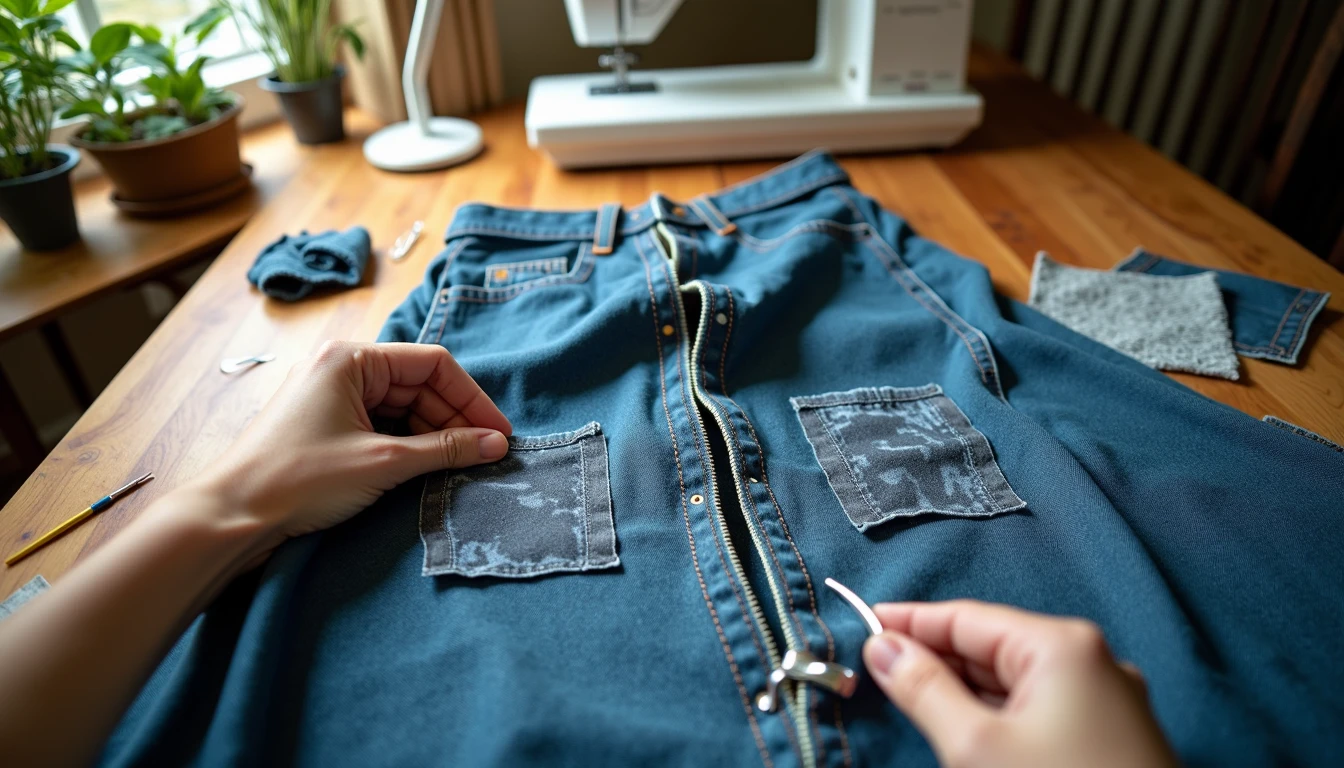
Turn old clothes into new styles with beginner-friendly upcycling you can finish in an afternoon
What You Need (tools, materials, time, skill level)
Clothing upcycling is basically: take what you already own (or thrift/swap) and reshape, mend, dye, or re-style it so it becomes something you actually reach for. The payoff is real—more outfits, less spending, less textile waste—without needing “fancy gear required.”
Time: Often “an afternoon” for starter projects (and yes, your first one might take longer; mine always does).
Skill level: Beginner-friendly, with options ranging from no-sew to simple stitching.
Cost: The source doesn’t list exact prices, but the whole point is save money by using what you already have or thrift inexpensively.
Upcycling toolkit: essentials for every project
The source keeps this broad, so here’s the tool logic (not a shopping list of specific brands):
- Measuring + planning tools: For the “measure twice, cut once” step. (If you skip planning, you’ll re-do work—ask me how I know.)
- Cutting tools: For “snip” style projects and any reshaping.
- Fastening options: If you’re going no-sew, you’ll be relying on knot or glue methods.
- Basic sewing setup (optional): For “simple stitches” and “tidy finishes” when you’re ready to level up.
Best sources for upcycling pieces
- Your own closet: Worn-out favorites (stains, small holes, stretched necklines), “meh” items, ill-fitting pieces, and anything made from cotton, linen, wool, silk (the source calls these versatile for dyeing and rebuilding).
- Thrifting and swaps: Look beyond labels—prioritize fabric quality, color, and prints. The source also recommends skimming upcycled clothing websites for silhouette ideas, then recreating them from thrifted pieces.
How To Do It (beginner process you can repeat)
This is the repeatable workflow I use for almost every upcycle, whether it’s a quick no-sew tweak or a bigger flip like a jeans-to-skirt.
1. Pick the piece based on the “why,” not guilt
- Choose something you’re not wearing because of length, shape, vibe, stains, small holes, or fit.
- If it’s sentimental, that’s valid too—the source calls out upcycling keepsakes into “wearable stories.”
2. Do quick fabric and fit forensics
- Fabric check: Natural fibers like cotton, linen, wool, silk are beginner-friendly for pressing, sewing, and dyeing (per source).
- Damage check: The source says minor fixes are fine; skip severe tears or stubborn odors.
- Fit check: If it’s too long or baggy, pin out the excess to visualize tailoring before you cut anything.
3. Plan it: “Measure twice, cut once”
- Decide your end goal: better fit, new silhouette, new color, or added detail.
- If you’re new, keep the first project small so you actually finish. Upcycling gets addictive once you get that first win.
4. Start with a no-sew win (snip, knot, glue, or dye)
The source explicitly calls these out as the easiest entry point:
- Snip: Adjust length or shape in a controlled way (small changes first).
- Knot: Great for temporary reshaping and testing proportions before committing.
- Glue: Helpful for simple fixes and quick finishes when sewing feels like too much.
- Dye: Big transformation with minimal construction (especially on natural fibers).
5. Level up to beginner stitching projects
When you’re ready for more structure and durability, step into “simple stitches” and “tidy finishes.” This is where your projects start looking less like an experiment and more like a real garment again.
6. Try a major transformation when you have momentum
The source calls out “trend-forward flips” and specifically mentions a jeans-to-skirt process: unpicking seams, inserting panels, and finishing the hem.
- This is the kind of project that looks intimidating, but it’s just a series of small, logical steps.
7. Care and laundering: make your upcycles last
The source includes care as a key section for a reason. An upcycle is only a win if it survives real life—washing, wearing, and re-wearing.
Where It Goes Wrong (and how to recover)
These are the beginner failure modes I see constantly in Stitch and Swap Talk, plus a few I’ve personally done.
- You start with the “hard” sentimental piece first
- Sign you’re off-track: You’re scared to cut, so the project stalls.
- Recovery move: Practice the technique on a “meh” item first, then come back.
- You choose severe damage or stubborn odors
- Sign: You’re patching more than you’re redesigning, or it still smells after cleaning.
- Recovery: Turn it into something smaller (panels, inserts, or a non-wearable textile project) or let it go. Not every piece is a hero.
- You cut before you pin and plan
- Sign: The shape is off and you’re chasing symmetry.
- Recovery: Slow down—pin out excess first, and make smaller cuts. “Measure twice, cut once” is not just dad advice; it saves garments.
- Dye goes uneven or the color isn’t what you pictured
- Sign: Patchy areas or unexpected tone.
- Recovery: Lean into it as a “custom color” moment, or overdye for a deeper, more even result. (This is one of those “second attempt clicks” skills.)
- No-sew methods don’t hold up
- Sign: Knots shift, glue edges lift, or the finish looks messy.
- Recovery: Treat no-sew as a prototype. Once you like the shape, reinforce with simple stitches and “tidy finishes.”
Pro Tips (real-world shortcuts that help)
- Size up when thrifting for upcycling: The source explicitly says it—extra material makes reshaping easier.
- Look beyond labels: Fabric quality, prints, and color matter more than the tag when you’re reworking the silhouette.
- Use inspiration strategically: The source suggests browsing upcycled clothing websites for silhouette ideas, then adapting them to what’s already in your closet.
- Skill-stack on purpose: Start with snip/knot/glue/dye, then move into stitching, then attempt bigger flips like jeans-to-skirt.
- Keep it friendly and doable: If your first result looks a little homemade, that is normal. You’re building a repeatable skill, not chasing perfection.
Bottom Line (when it’s worth it)
Upcycling is worth attempting when you’ve got a packed closet but “nothing to wear,” and you want a cheaper, lower-waste way to get clothes that feel like you. Start with no-sew changes if you’re nervous, and graduate to stitching once you’re ready for stronger, cleaner results.
If the garment has severe tears, stubborn odors, or the fit changes are beyond what you can comfortably pin and test, that’s a good moment to either choose a different piece or keep the idea but simplify the execution. The best upcycles are the ones you actually finish—and wear.