
Sewing machine maintenance you can do in 10 minutes to stop skipped stitches and weird noises
What You Need (tools, materials, time, skill level)
You can keep your sewing machine running smoothly with a small, repeatable routine. It’s the kind of habit that makes thrift flips and weekend upcycles way less frustrating—because nothing kills the vibe like sudden skipped stitches halfway through a hem.
Tools & materials (from the source):
- A soft brush (for regular cleaning)
- Sewing machine oil (a few drops, only where your manual indicates)
Time: A few minutes after each project (plus periodic oiling and an annual service)
Skill level: Beginner-friendly (no special tools or fancy skills needed)
What this maintenance prevents:
- Dust/lint buildup that impedes performance
- Friction between moving parts (when oiling is needed)
- Stitch issues from a dull needle
- Bobbin-area chaos from dirt or damage
How To Do It (simple routine, in the right order)
These steps are straight-up “keep it boring so it works” maintenance—the kind that saves you from troubleshooting later.
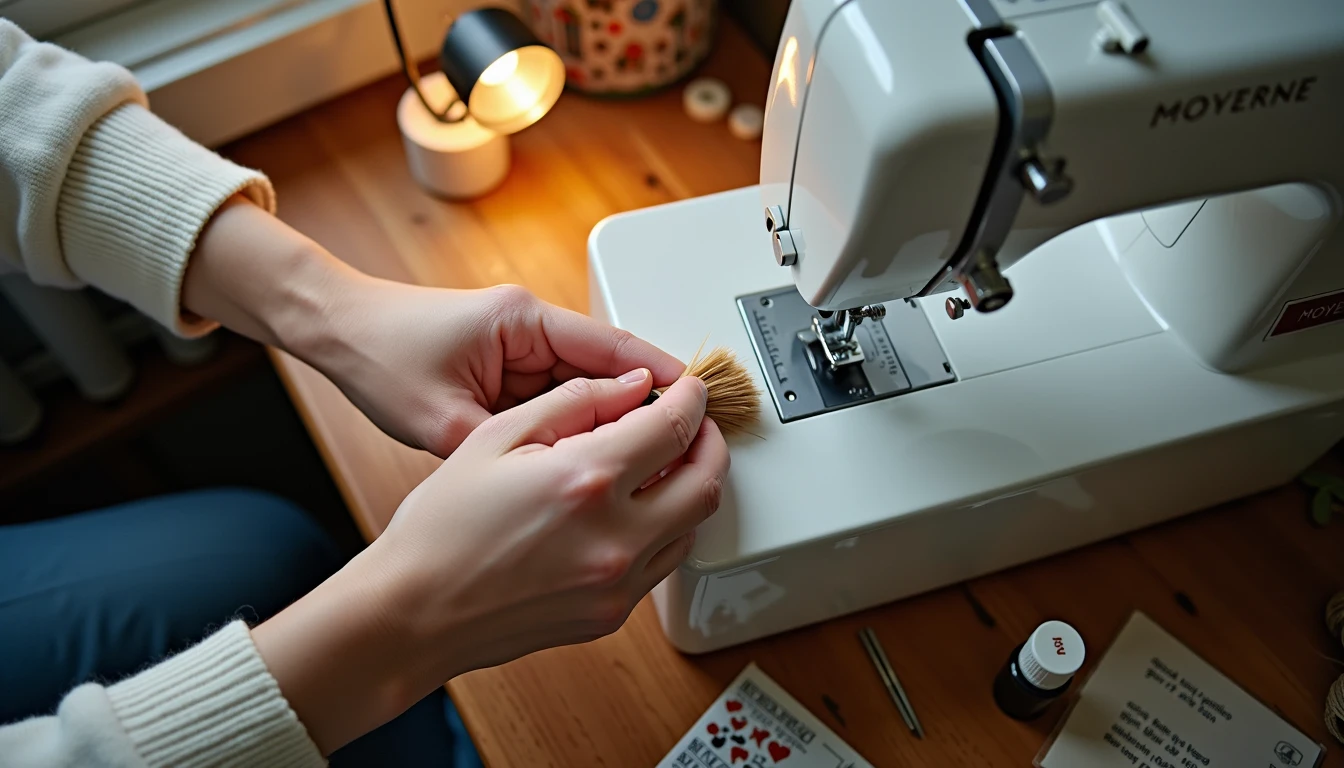
1. Clean after every use
- What to do: Use a soft brush to remove dust and lint.
- Why it matters: The source is clear: dust and lint can accumulate and impede your sewing machine’s performance. Lint is sneaky too—it doesn’t just sit there; it migrates into the places you least want it.
2. Check the needle and replace it if necessary
- What to do: Look at your needle like it’s a consumable (because it is).
- Beginner translation: The needle is the part that punctures fabric to form stitches. A tired needle can still “sew,” but it may sew badly.
- Source guidance: The needle is a crucial component. Change it after every project for sharp, precise stitching.
- Real-life note from my sewing nook: When I ignore this, my machine will start acting “moody”—skipping stitches or making ugly, inconsistent lines. Changing the needle is often the fastest fix.
3. Inspect the bobbin and bobbin area
- What to do: Regularly check and clean the bobbin area.
- Why it matters: The bobbin (the lower thread spool) is basically half your stitch. The source warns that a dirty or damaged bobbin can wreak havoc on operation.
- Beginner tip: If your stitches suddenly look messy on the underside, the bobbin area is one of the first places to check.
4. Apply oil periodically (only as your manual indicates)
- What to do: Use a few drops of sewing machine oil in the indicated spots.
- Why it matters: Oil reduces friction between moving parts and helps the machine run smoothly.
- Important boundary from the source: Always check your machine’s manual for specific oiling guidelines. Different machines have different rules, and some modern machines are not meant to be oiled by the user.
5. Schedule professional servicing annually
- What to do: Plan for annual professional servicing for thorough maintenance.
- Why it matters: The source frames it as a long-term investment in your machine’s health and longevity. Think of it like taking care of your only “creative portal” that can actually punch through denim seams without complaining.
Where It Goes Wrong (common mistakes + how to recover)
This is the part I wish someone had told me when I started. Maintenance is simple, but beginners tend to get tripped up in very predictable ways.
- Failure mode: You only clean when something is already wrong
- What it looks like: Your machine suddenly gets finicky—skipped stitches, louder sounds, or thread issues.
- Recovery move: Get back to “clean after every use.” A quick brush-out is way easier than troubleshooting mid-project.
- Failure mode: You ignore the needle until it breaks or ruins a project
- What it looks like: Skipped stitches, uneven stitching, or needle breaks.
- Recovery move: Replace the needle. The source recommends changing it after every project, which feels extra until you experience how many problems a fresh needle prevents.
- Failure mode: The bobbin area becomes a mystery zone
- What it looks like: Weird stitching behavior, especially on the underside of the fabric, or the machine feels rougher.
- Recovery move: Check and clean the bobbin area regularly. The source is blunt: a dirty or damaged bobbin can cause havoc.
- Failure mode: You oil randomly (or you oil the wrong spots)
- What it looks like: Best case, nothing improves. Worst case, you create new problems.
- Recovery move: Follow the source’s rule: oil only in the indicated spots and check your manual for the right guidance.
- Failure mode: You keep sewing through warning signs
- What it looks like (straight from the source): Unusually loud noises, skipped stitches, or needle breaks.
- Recovery move: Stop and seek professional help. The source says you can schedule a repair by calling 800-659-3585.
Pro Tips (beginner shortcuts that actually help)
- Treat maintenance like part of the project, not a separate chore. When you finish a seam or a whole project, tack on a quick clean so the next session starts smoothly.
- Use the checklist approach. The source’s maintenance checklist is solid because it’s simple:
- Clean after every use
- Check the needle and replace it if necessary
- Inspect the bobbin and bobbin area
- Apply oil periodically as indicated in the machine manual
- Schedule professional servicing annually
- Listen to your machine. If it’s suddenly louder, skipping stitches, or breaking needles, don’t blame yourself first. Those are legitimate warning signs that something needs attention.
Bottom Line (what to DIY vs. when to call a pro)
If you can brush out lint, keep an eye on your needle, and check the bobbin area, you’re already doing real sewing machine care—not just “vibes.” Oil only if your manual indicates it, and plan on annual professional servicing to protect your machine long-term.
DIY it when: You’re doing routine cleaning, needle swaps, bobbin-area checks, and manual-approved oiling.
Call a pro when: You notice unusually loud noises, skipped stitches, or needle breaks—those are the source’s clear signals to seek help, including scheduling repair at 800-659-3585.