If you've ever sat down at a sewing machine and wondered how to put a thread in a sewing machine without turning the fabric into a tangled mess, you're not alone. That moment of threading the needle, winding the bobbin, and getting everything lined up can feel like a puzzle. But once you break it down into clear steps, it becomes second nature. Let's walk through it together — no shame, no gatekeeping.
Gather Your Supplies
Before you start, make sure you have everything you need: your sewing machine, a spool of thread (all-purpose polyester is great for practice), an empty bobbin that matches your machine's size, a pair of small scissors, and the manual (if you have it). If you don't have the manual, don't worry — most machines follow the same basic threading path. Just take a deep breath and look for numbered guides on the machine body.
Step 1: Wind the Bobbin
Most machines have a bobbin winder on the top or side. Place your spool on the spool pin, then pull the thread over the tension disc (usually a small metal disc with a notch). Wind the thread around the bobbin a few times by hand, then push the bobbin onto the winder spindle. Engage the winder by moving it to the right or pressing a button, depending on your model. Hold the thread tail and press the foot pedal gently. The bobbin will fill evenly. Stop when it looks full but not overstuffed. Clip the thread and remove the bobbin.
Step 2: Insert the Bobbin
Open the bobbin case (often under a metal plate near the needle). Drop the bobbin in so the thread unwinds counterclockwise (or check your machine's arrow). Pull the thread through the tension slot — it should click into place. Leave a 4-inch tail. Close the cover.
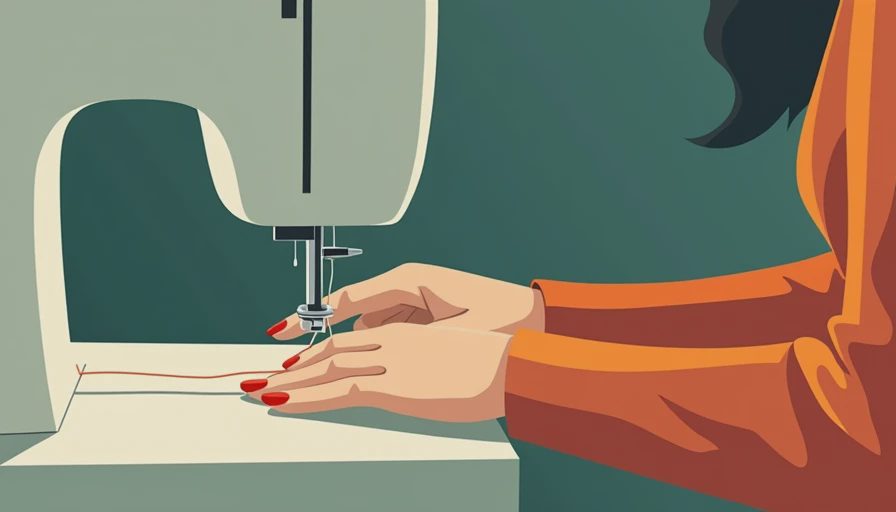
Step 3: Thread the Upper Thread
Raise the presser foot and turn the handwheel toward you to raise the take-up lever to its highest point. Put your spool on the spool pin. Pull the thread through the thread guide (usually at the top), then down through the tension discs (there's often a lever you pull to open them). Take the thread up through the take-up lever, then down to the needle. Most machines have numbered steps — follow those if visible. Finally, thread the needle from front to back. Pull a good 6-inch tail through the eye.
Step 4: Bring Up the Bobbin Thread
Hold the upper thread tail with your left hand. Turn the handwheel toward you one full rotation so the needle goes down and comes back up. Gently pull the upper thread — a loop of bobbin thread should pop up. Pull that loop to bring the bobbin thread tail out. Place both thread tails under the presser foot and toward the back.
Step 5: Test Your Threading
Lower the presser foot, hold the thread tails, and slowly sew a few stitches on a scrap piece of fabric. If the stitches look loose or looped, rethread the bobbin or check the tension. If the thread breaks, check for snags or a dull needle. No such thing as a stupid question — if it's not working, go back to step 2 and make sure the bobbin is seated correctly.
Common Threading Mistakes and How to Fix Them
- Skipped stitches: Often from a dull or bent needle. Swap in a fresh needle (size 80/12 for medium-weight fabrics).
- Top thread bunching under fabric: The upper tension is too tight. Try dialing it down a notch.
- Bobbin thread showing on top: Bobbin tension is too loose. Tighten the screw on the bobbin case (tiny turns only).
- Machine jamming: Likely a threading error. Rethread from scratch, ensuring the presser foot is up when threading the top.
Troubleshooting: Quick Comparisons for Common Issues
Mastering how to put a thread in a sewing machine involves understanding what each problem signals. If your machine makes a grinding noise or the needle won't pick up the bobbin thread, the issue is almost always with the bobbin insertion. Check that the bobbin sits flat and the thread unwinds in the correct direction. If the top thread keeps breaking, compare your tension setting to the recommended range for your fabric weight. For lightweight cottons, set tension between 2 and 4; for denim, try 5 or 6. A stitch that looks like a straight line on top but has loops underneath means the upper tension is too loose. Tighten it by turning the dial one number at a time and testing. On the other hand, if loops appear on top, the bobbin tension needs adjustment. One tiny turn of the bobbin case screw (clockwise to tighten) can fix it. These comparisons help you diagnose without guesswork.

Practice Makes Perfect
Threading a sewing machine gets smoother with each try. Spend 10 minutes just practicing the steps — wind a bobbin, thread the machine, sew a line on scrap fabric. Keep your manual nearby or look up your machine model on YouTube for visual confirmation. Over time, you'll be able to do it in under a minute without thinking.
Final Thoughts
Knowing how to put a thread in a sewing machine is the first real skill every sewist learns. Once you've got it, you can move on to mending hems, upcycling thrift finds, or making your own clothes from scratch. Remember: no question is too small. If you get stuck, ask the StitchSwapTalk community — we've all been there.





No notes yet — write the first one.