A sewing machine for quilting does not need to be the biggest, fanciest, or most expensive machine in the shop. It needs to handle layered fabric steadily, make a reliable straight stitch, and give you enough space to move a quilt sandwich without fighting the machine. No such thing as a stupid question here, so let's walk through what actually matters for thrifted fabric projects, patchwork throws, and your first serious quilt.
Start with the kind of quilting you want to do
Before comparing brands, picture the projects you will make. Piecing cotton squares is much less demanding than quilting a full-size blanket with thick batting. If you mainly want to turn old shirts, denim, or curtains into patchwork, a basic domestic machine can be a great starting point. You will value a clean straight stitch, adjustable stitch length, and an easy-to-use reverse button more than dozens of decorative stitches.
For larger quilts, look for a machine with a wider throat space, sometimes called the harp area. This is the distance between the needle and the machine body. More room lets you roll or bunch less fabric under the arm. A walking foot is also useful because it helps feed multiple layers evenly. Some machines include one, while others require a compatible accessory purchased separately.
Free-motion quilting has different needs. You will want a machine that allows feed dogs to drop or cover, plus a darning or free-motion foot. Speed control is helpful because beginners often sew too quickly around curves. A knee lift can also make a difference when repositioning a quilt, although it is a convenience rather than a requirement.
Features worth paying for
The most useful sewing machine for quilting features are not always the ones printed in large letters on the box. A strong motor matters when you sew cotton, batting, and backing together, but a machine should still feel controlled at slow speeds. Test the foot pedal if you can. A pedal that jumps from stopped to racing makes careful stitching frustrating.
Choose adjustable presser-foot pressure if you often work with slippery vintage fabric, fleece, or unusual layers. This setting controls how firmly the foot presses on the fabric. A drop-in bobbin is friendly for beginners because it is quick to insert and easy to monitor. A front-loading bobbin is not automatically worse, but it can take longer to learn.
Needle position, a quarter-inch foot, and a clear extension table are practical extras. A quarter-inch foot helps create consistent patchwork seams, but measure it against a ruler rather than trusting the label alone. Some low-cost feet are slightly inaccurate. An extension table supports a quilt's weight and can prevent uneven feeding near the needle.
Do not pay extra just for hundreds of decorative stitches if quilting is your main goal. Those stitches can be fun for clothing repairs and visible mending, but they will not compensate for poor fabric control or skipped stitches.

New, used, or refurbished?
A new sewing machine for quilting often costs roughly $200 to $800 for a dependable home model, with computerized or larger machines reaching beyond that range. Entry-level machines can sew beautiful quilts, but they may have smaller work areas and lighter construction. That is fine if you plan to make baby quilts, table runners, and wall hangings.
The secondhand market can be excellent, especially for vintage machines built with metal parts. Brands such as Singer, Janome, Brother, Juki, and Bernina have many machines in circulation, but the exact model matters more than the logo. A $75 machine that needs timing repair is not a bargain if the repair costs $150. Ask whether the machine has been cleaned, whether the foot pedal works, and whether the original power cord is included.
Here is what went wrong in one common thrift-store scenario: a machine looked clean, but the needle repeatedly jammed. The fix was not a new motor. The bobbin had been inserted incorrectly, and the needle was bent. After replacing the needle, rethreading with the presser foot raised, and cleaning lint from the bobbin area, the machine stitched normally. Always test a used machine on scrap fabric before carrying it home when possible.
A refurbished machine from a reputable dealer costs more than a random marketplace listing, but it usually comes with servicing and a limited warranty. That extra $50 to $150 can be worthwhile if you are nervous about troubleshooting.
Set up your sewing machine for quilting
Even the right machine can behave badly when setup is rushed. Begin with a new quilting needle, usually size 80/12 or 90/14 depending on your fabric and batting. A dull needle can cause skipped stitches, shredded thread, and mysterious popping sounds. Use quality all-purpose polyester thread for everyday piecing, then test specialty thread before committing to a whole quilt.
Place the machine on a stable table with enough room behind and to the left for fabric. Wind the bobbin evenly, insert it according to the manual, and thread the upper path with the presser foot raised. Set the stitch length around 2.5 to 3 millimeters for piecing. Sew a test seam on scraps containing the same number of layers as your project.
If the fabric puckers, reduce thread tension gradually and check that you are not pulling the quilt through. If stitches look uneven, clean the feed dogs and slow down. If the machine skips stitches, install a fresh needle and confirm that it is fully pushed into the needle clamp. These small fixes solve a surprising number of beginner problems.
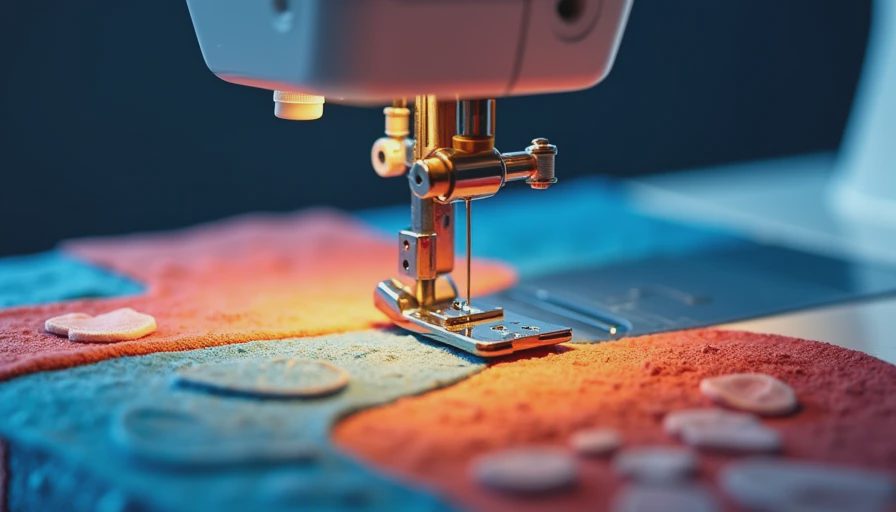
Models and shopping routes to consider
A beginner-friendly sewing machine for quilting might include a Brother or Janome mechanical model with a free arm, adjustable stitch length, and several presser feet. These brands have broad dealer and accessory support, which makes replacement bobbins and feet easier to find. Juki is often considered by sewists who prioritize strong straight stitching and smooth fabric handling. Bernina machines can offer excellent construction and refined controls, but new models commonly sit at a higher price point.
Those descriptions are starting points, not a command to buy one particular machine. Model lines change, and accessories are not interchangeable across every machine. Compare the manual, throat-space measurement, warranty, and included feet. Search for demonstration videos showing actual layered fabric rather than only an empty needle moving quickly.
For a tight budget, consider spending $250 on a solid machine and keeping $40 to $75 for needles, a quarter-inch foot, extension table, and walking foot. That package can be more useful than putting the entire budget into a machine with decorative features you will rarely touch.
A practical test before you buy
Bring two or three fabric scraps, a piece of batting, and your usual thread. Sew a straight seam, backstitch, and corner. Then test a few inches with the walking foot if it is included. Listen for harsh rattling, watch for skipped stitches, and check whether the fabric feeds without hand pulling. Try the reverse lever and bobbin removal. If a control feels confusing in a store, imagine using it after a long evening of quilting.
For a used sewing machine for quilting, inspect the handwheel, needle bar, power cord, foot pedal, and light. Make sure the needle moves smoothly by turning the handwheel toward you. Check for rust around the bobbin case and ask when the machine was last serviced. Cosmetic scratches are usually less important than missing proprietary parts.
The best choice is the machine you can thread, test, maintain, and enjoy using. Leave room in your budget for good needles and fabric, because those supplies affect results as much as the machine. When you compare a sewing machine for quilting by control, space, feeding, and repairability instead of marketing claims, your first quilt becomes much less intimidating—and your thrifted fabric has a better chance of becoming something you will actually use.
No notes yet — write the first one.