If you have ever stood in a fabric store holding three nearly identical rolls, you are not alone. Learning the types of elastic makes waistbands, cuffs, underwear, swimwear, and thrifted clothing repairs much less mysterious. The right elastic should stretch comfortably, recover its shape, and suit the fabric you are sewing. The wrong one can twist, dig into skin, or go limp after a few wears. No such thing as a stupid question here — let's walk through it.
The main types of elastic for clothing
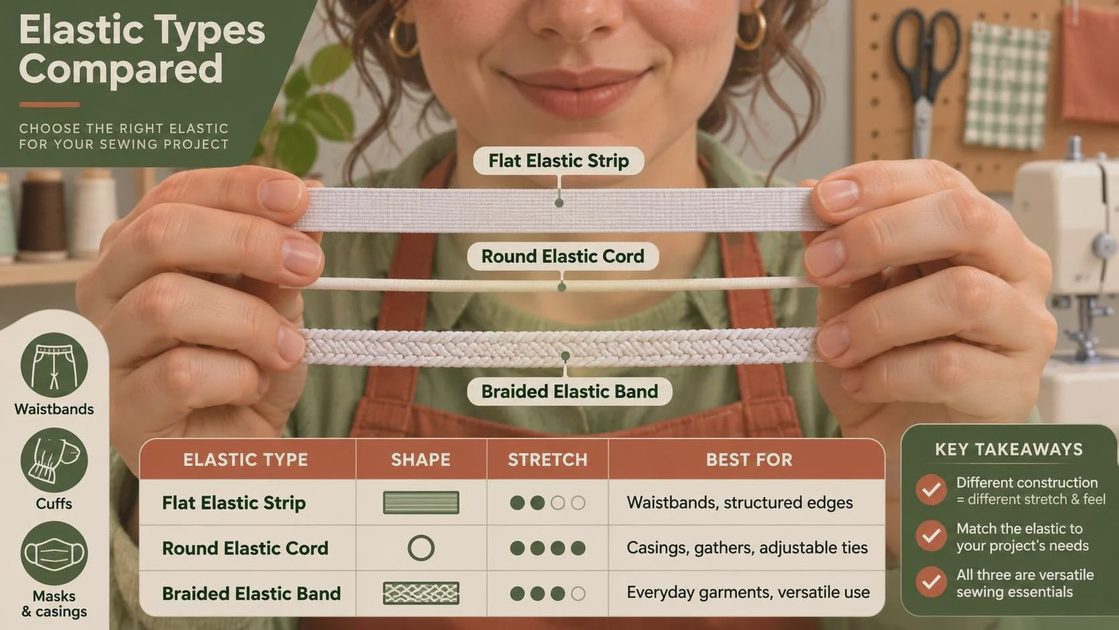
The most common types of elastic are braided, knitted, woven, lingerie, clear, and buttonhole elastic. They are not interchangeable, even when their widths look similar.
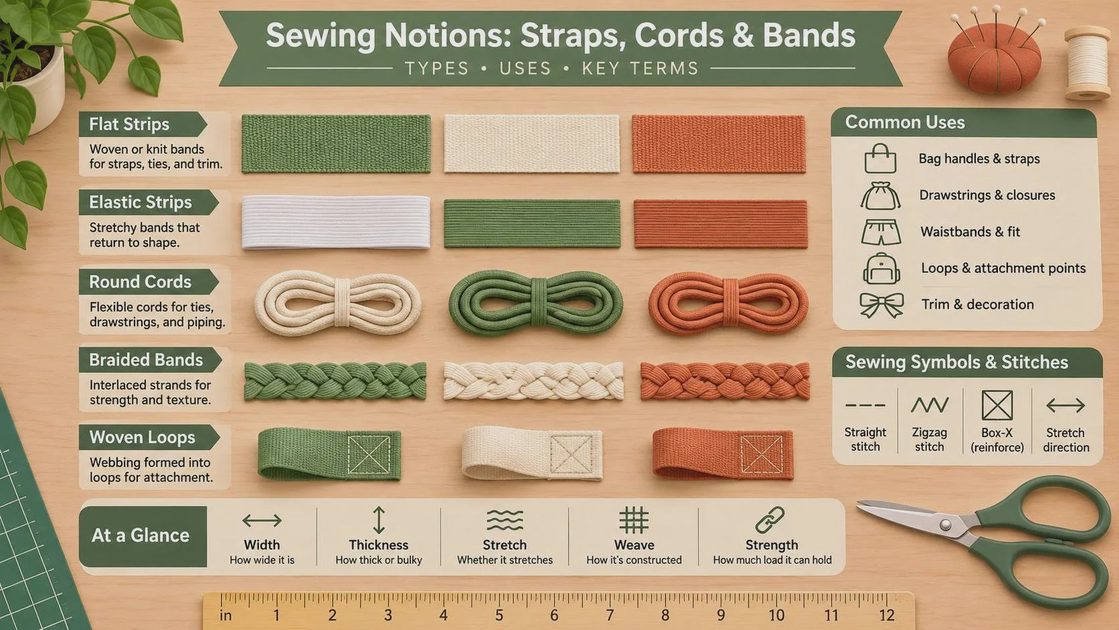
Braided elastic has visible lengthwise ridges and narrows when stretched. It is inexpensive and useful inside casings for pajama pants, loose skirts, sleeves, and simple repairs. It is not ideal for sewing directly onto fabric because stitching can reduce its ability to stretch.
Knitted elastic is softer and usually stays the same width when pulled. It works well for lightweight waistbands, children’s clothing, sleepwear, and casual shorts. It is comfortable, but it can roll in a wide casing if the fabric does not support it.
Woven elastic is firm, smooth, and resistant to rolling. It is a dependable choice for structured waistbands, workwear, jeans, bags, and heavier cotton garments. A one-inch woven strip can feel much stronger than a one-inch knitted strip, so do not judge strength by width alone.
Lingerie elastic has a soft plush side, decorative edge, and a firm side intended for underwear openings. Clear elastic is narrow and transparent, making it useful for stabilizing shoulder seams, knit necklines, and swimwear. Buttonhole elastic has small openings that let you adjust a waistband with a button sewn inside the garment.
How to choose elastic by project
Start with the garment, not the package color. For a gathered skirt or pajama waistband, soft knitted elastic usually gives the most comfortable result. For jeans or a fitted skirt, woven elastic provides better recovery and a cleaner finish. If you are replacing elastic in a vintage garment, measure the old piece before removing it and note whether it was stitched down, threaded through a casing, or attached at the side seams.
The fabric matters too. A lightweight rayon cannot comfortably support very firm waistband elastic, while heavyweight denim can make soft elastic feel ineffective. Stretch the fabric and elastic together in your hand. They should cooperate rather than fight each other. If the elastic stretches much farther than the fabric, the finished garment may bunch sharply. If it barely stretches, movement will feel restricted.
For a basic casing, use elastic slightly narrower than the casing width. A half-inch casing generally suits three-eighths-inch or half-inch elastic, while a one-inch casing can hold three-quarter-inch or one-inch elastic. Leave enough room for the elastic to move without folding. Types of elastic with a plush or decorative edge often need a different construction because they are meant to sit against the body or show at an opening.
Types of elastic for waistbands
Waistbands are where elastic choice becomes especially noticeable. Soft knitted elastic is friendly for lounge pants and gathered skirts because it bends easily around the body. Woven elastic is better when you want a firm, stable waistband that stays flat. It is often a good match for a thrifted skirt made from denim, canvas, wool blend, or sturdy cotton.
To calculate a starting length, measure the wearer’s waist where the garment will sit, then subtract a small amount for tension. For a 32-inch waist, cutting a 29- to 31-inch piece can be a reasonable starting range for medium elastic, but the exact amount depends on stretch and comfort. Test before closing the casing. Wrap the elastic around the body, overlap the ends by about one inch, and pin it. It should feel secure without leaving a deep mark.
Here is what went wrong in one common repair: I replaced old waistband elastic with a cheaper, very stretchy strip of the same width. The pants looked fine on the table, but the waistband sagged after an hour. The fix was to use firmer woven elastic, shorten it slightly, and sew the overlap with a box-and-cross stitch. The garment stayed comfortable and stopped sliding down.
Choosing elastic for lingerie, swimwear, and knits
Lingerie elastic is designed for comfort and controlled tension. One edge may have decorative scallops, while the other has a soft brushed finish. Follow the package guidance for which side faces the body. It usually needs a zigzag stitch or a three-step zigzag so the seam can stretch without snapping thread.
Swimwear calls for elastic that tolerates moisture, chlorine, salt, and repeated stretching. Rubber-based swim elastic is commonly used around leg openings and bust edges, while clear elastic can stabilize narrow seams. Avoid assuming that ordinary waistband elastic belongs in a swimsuit; it can deteriorate faster or become uncomfortable when wet.
Knit garments often need elastic for stabilization rather than gathering. A narrow clear strip in a shoulder seam can prevent a T-shirt from stretching out. When sewing it, place the elastic along the seam allowance and use a stretch-friendly stitch. Do not pull it aggressively unless the pattern specifically instructs you to create gathering.
Sewing elastic without common beginner mistakes
Before cutting, test a two-inch sample. Stretch it repeatedly, wash it if the finished garment will be washed, and check whether it curls, twists, or loses recovery. This small test can save an entire afternoon of unpicking.
When inserting elastic into a casing, attach a safety pin or bodkin to one end and guide it through slowly. Keep the other end anchored with a pin so it does not disappear inside the tunnel. Once both ends meet, overlap them evenly and sew a secure rectangle with a diagonal cross. Pull the waistband around the casing to distribute gathers before stitching the opening closed.
For elastic sewn directly to fabric, divide both the elastic and fabric into quarters. Match the marks, pin or clip them, and stretch only the elastic as you sew. A wide zigzag is safer than a straight stitch because the seam must expand. Practice on a scrap first; too much tension creates puckers, while too little leaves loose sections.
Caring for elastic and shopping secondhand
Elastic ages from heat, body oils, detergent, and repeated tension. If a vintage waistband feels sticky, cracks when stretched, or leaves black residue, replace it rather than trying to revive it. A garment can be worth saving even when the original elastic is not.
At a thrift store, inspect waistbands, cuffs, underwear edges, and swimsuit leg openings. Gently stretch the area a few times. Good elastic should return close to its original shape. If it stays rippled or feels brittle, treat replacement as part of the project budget. Basic braided or knitted elastic can cost only a few dollars, while specialty lingerie or swim elastic often costs more per yard.
Keep leftover pieces labeled by width, firmness, and intended use. A small box with separate bags for waistband, lingerie, clear, and woven elastic prevents guesswork later. Types of elastic become much easier to identify after you have compared them side by side.
A simple elastic decision guide
For soft pajamas, choose knitted elastic. For sturdy pants or jeans, choose woven elastic. For a casing that needs a low-cost repair, braided elastic can work. For underwear, choose lingerie elastic. For stabilizing knits, consider clear elastic. For adjustable children’s waistbands, use buttonhole elastic.
If you are still unsure, buy a short length of two likely options and test them in the actual fabric. That is more useful than relying on appearance alone. Types of elastic vary in stretch percentage, recovery, width, and softness, even within the same category. A five-minute sample tells you what a product will really do.
The best sewing choice is the one that matches the garment’s movement and the wearer’s comfort. Start with a scrap, measure twice, and do not be discouraged if your first waistband twists. Unpick the seam, flatten the elastic, and try again. That small repair is how most of us learned.

No notes yet — write the first one.